March 13, 2026
Real World Assets vs Real World Locations: The Concept Discovery
Crypto chased tokenized asset ownership, while a more useful layer emerged: Real World Locations, tokenizing verified experiences and reputation tied to physical places.

The crypto industry spent 2021-2025 obsessed with Real World Assets—tokenizing real estate, commodities, bonds, art. By late 2025, the tokenized RWA market capitalization exceeded $185 billion, with projections reaching $16 trillion by 2030, according to Boston Consulting Group analysis. The thesis was pretty straightforward: bring traditional financial assets on-chain for better liquidity, transparency, and composability.
Did it work? Well, while everyone focused on tokenizing asset ownership, a parallel category emerged that's arguably more valuable for everyday users: Real World Locations, which stands for verifying and tokenizing authentic experiences and reputation about physical places rather than ownership of the places themselves.
What RWA Actually Means
The Real World Assets in crypto refers to tokenizing ownership or financial claims on physical assets. The point is reinforced by multiple strong examples: BlackRock tokenizing treasuries on Ethereum, Centrifuge tokenizing real estate, and Goldfinch tokenizing credit to emerging markets.
That distinction matters because the problems are different, the solutions are different, and the addressable markets are also different. While RWA serves institutional finance, RWL serves the 1.5 billion people who travel each year internationally and countless more navigating their own cities daily.
The value proposition is clear: blockchain provides transparent ownership records, 24/7 trading markets, programmable compliance through smart contracts, and composability with DeFi infrastructure. A tokenized treasury bond can be used as collateral in a DeFi lending protocol instantly—try doing that with traditional bonds, which require settlement periods and custodian intermediaries.
Industry estimates suggest that bringing illiquid assets like private equity, real estate, and alternative investments on-chain could unlock $2-4 trillion in value through improved liquidity and reduced friction. This is genuine innovation solving real problems in traditional finance. However, it's fundamentally about financial asset ownership, not experiential value.
What RWL Actually Means
Real World Locations is a distinct category focusing on verification and tokenization of authentic experiences, reputation, and knowledge about physical places.
It's not tokenizing restaurant ownership, it's creating cryptographic proof that you actually visited, minting that verified discovery as a digital asset, and building reputation infrastructure around authentic place knowledge.
The problem space is massive: according to Statista's 2025 data, the global online travel market will reach $833 billion by 2028. Even though BrightLocal research shows 87% of travelers don't trust the reviews driving their decisions in that market. The fake review industry extracts $15.7 billion annually through manufactured credibility.
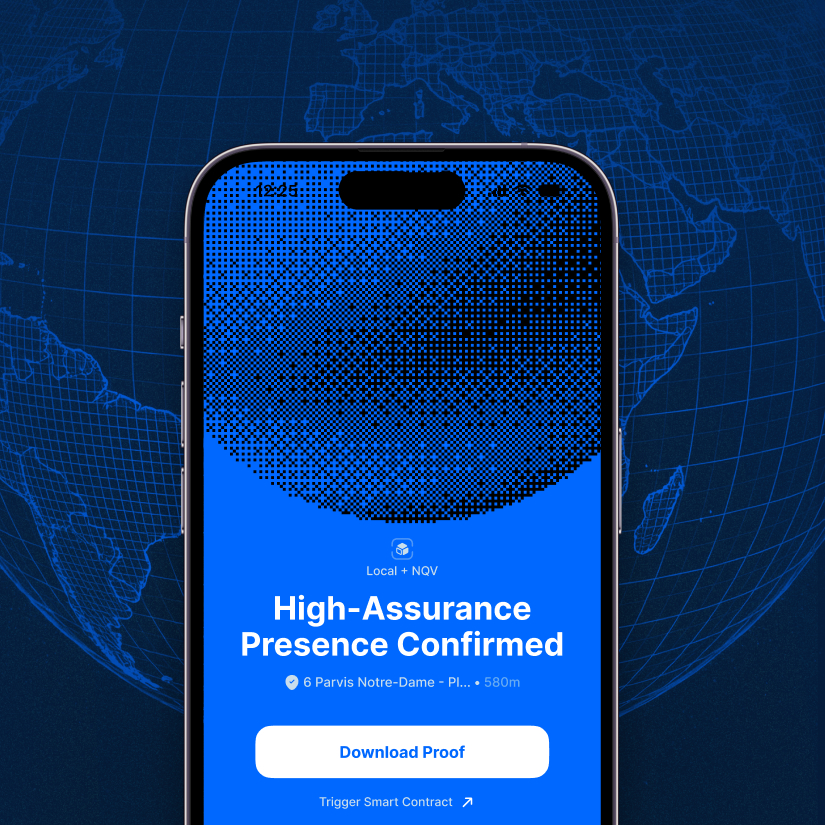
RWL infrastructure solves this through cryptographic verification of physical presence. daGama's Proof of Presence protocol creates blockchain attestations proving you were actually at a location. GPS coordinates, timestamps, device signatures—all cryptographically hashed and stored on Arbitrum, permanently and immutably.
But verification is just the foundation. The real value emerges from what becomes possible when presence is provable: verified discovery as a digital asset, portable reputation infrastructure, AI trained on ground truth, and composable local knowledge that improves recommendations across cities.
RWA tokenizes ownership. RWL verifies experience. Understanding the difference unlocks a $16 trillion opportunity hiding in plain sight.
Why the Categories Are Distinct
Now, let’s check the actual set of ongoing problems.
RWA solves ownership transfer. How do we move a title to a building, bond, or gold bar on-chain with legal recognition? The challenge is regulatory compliance, custody arrangements, and integration with existing financial systems.
RWL solves verification and reputation. How do we prove someone actually visited a place and their experience was authentic? The challenge is cryptographic location proof, anti-fraud systems, and AI trained on verified data.
RWA targets institutional capital. The addressable market is pension funds, family offices, and institutions seeking exposure to alternative assets through blockchain rails.
RWL targets everyday users. The addressable market is 1.5 billion international travelers annually, plus billions more navigating their local cities seeking trustworthy recommendations.
RWA requires regulatory approval. You can’t tokenize securities without compliance frameworks. The progress overall depends on regulators.
RWL operates on public infrastructure. Cryptographic proof of location doesn't require regulatory permission. Meanwhile, AI recommendations don't need government approval. It ships now.
How RWL Creates Value in Practice
- Smart Cities + Verified Presence
Cities worldwide are deploying smart infrastructure—with sensors, IoT networks, and real-time analytics. According to Allied Market Research, the global smart city market will reach $6.96 trillion by 2030.
Smart city data is only valuable if it's trustworthy. Foot traffic sensors tell you how many people visited an area, but not whether those visits were satisfying experiences. RWL verification infrastructure makes smart city data meaningful by verifying that visitors actually went to locations they reviewed, distinguishing verified residents from tourists, and correlating quality assessments with verified repeat visits.
- Conference & Event Verification
Events represent a massive RWL use case. Major crypto conferences like ETHDenver (20,000+ attendees), Consensus (15,000+), and Bitcoin Asia (10,000+) need verifiable attendance records.
Currently, attendance is self-reported. daGama's High Assurance PoP verification deployed at conferences creates cryptographic attendance proof through physical anchors issuing challenge-response authentication. Your attendance becomes provable on-chain, creating portable professional credentials that work across platforms. Industry estimates value the global events sector at $1.5 trillion annually—all of it benefiting from verifiable attendance infrastructure.
- DePIN & Logistics Verification
Decentralized Physical Infrastructure networks need verification that nodes and services are actually where they claim to be. A delivery service needs proof that packages reached checkpoints, and a sensor network needs verification that sensors are positioned correctly.
The RWL infrastructure solves this through cryptographic location proof. daGama's PoP protocol can verify delivery checkpoint passage, sensor placement confirmation, and service availability—all on-chain, permanently auditable, impossible to fake at scale. Sector analysis estimates DePIN networks could reach $3.5 trillion in value by 2028, requiring verification infrastructure.
- AI Training Data Quality
AI is only as good as its training data. MIT research shows GPT-generated reviews fool humans 56% of the time. When AI trains on datasets containing massive amounts of synthetic content, models learn circular patterns with no grounding in verified reality.
RWL infrastructure creates verified training datasets. AI trained on daGama's cryptographically proven check-ins learns from ground truth: people who were verifiably present and their verified experiences. Traditional travel AI achieves 62% user satisfaction. AI trained on verified RWL data achieves 87% satisfaction because recommendations are based on proven patterns in authentic human behavior.
The Market Opportunity Nobody's Pricing
At the start of 2026, tokenized RWA on-chain value sits in the tens of billions, with credible estimates at ~$20–35B live today and projections pointing toward $100B+ as institutional pilots scale.
RWL still doesn’t exist as a recognized market category, with no consolidated market cap or standardized reporting. Yet the addressable market is materially larger:
- Global travel & tourism: around $10.4T annual economic impact
- Online travel booking: multi-trillion trajectory, with $2.2T projected long-term
- Smart cities/travel tech: tens of billions today, scaling into hundreds of billions
- Events industry: around $1.8T annually.
These are not separate markets as they rely on the same RWL primitives: cryptographic proof of physical presence, portable reputation, and AI trained on verified ground truth. Venture activity accelerated sharply in 2025–2026, but remains pre-institutional and pre-category—mirroring where RWA stood in 2019–2020, just before institutional adoption inflected.
The Category Definition Matters
The distinction between RWA and RWL isn't just semantic. Treating all real-world blockchain integration as "RWA" misses that verification infrastructure serves fundamentally different needs than ownership infrastructure.
RWA brings financial assets on-chain, which is critical for institutional adoption, but is narrow in scope. RWL brings verified reality on the blockchain rails, critical for AI, smart cities, travel, events, logistics, credentials—any scenario requiring proof that something happened in the physical world.
The daGama team is building a consumer app for Real World Locations that leverages blockchain and AI to create a map with trusted recommendations and reinvigorate users’ and businesses’ interest in this highly lucrative sector.
RWA tokenizes what you own. RWL verifies where you've been and what you've experienced. Both are valuable. Both are necessary. But they're not the same thing.
Experience Real World Locations infrastructure. Download daGama to generate cryptographic proof of presence, build portable reputation, and navigate cities through verified local knowledge.
Download on App Store | Get it on Google Play | Explore RWL
This article is for informational purposes only and does not constitute financial, investment, or legal advice.