July 1, 2026
The Creator Economy Is Going Physical — And It Starts With Where You Are
The creator economy traps people in "rented reach"—platforms own the audience and can revoke it anytime. Real creator value requires owned relationships, verified reputation, and contribution-based rewards, which physical-world discovery naturally enables.

This article is part of daGama's weekly blog series exploring the intersection of physical-world experience, on-chain infrastructure, and the future of how people discover and interact with the places around them.
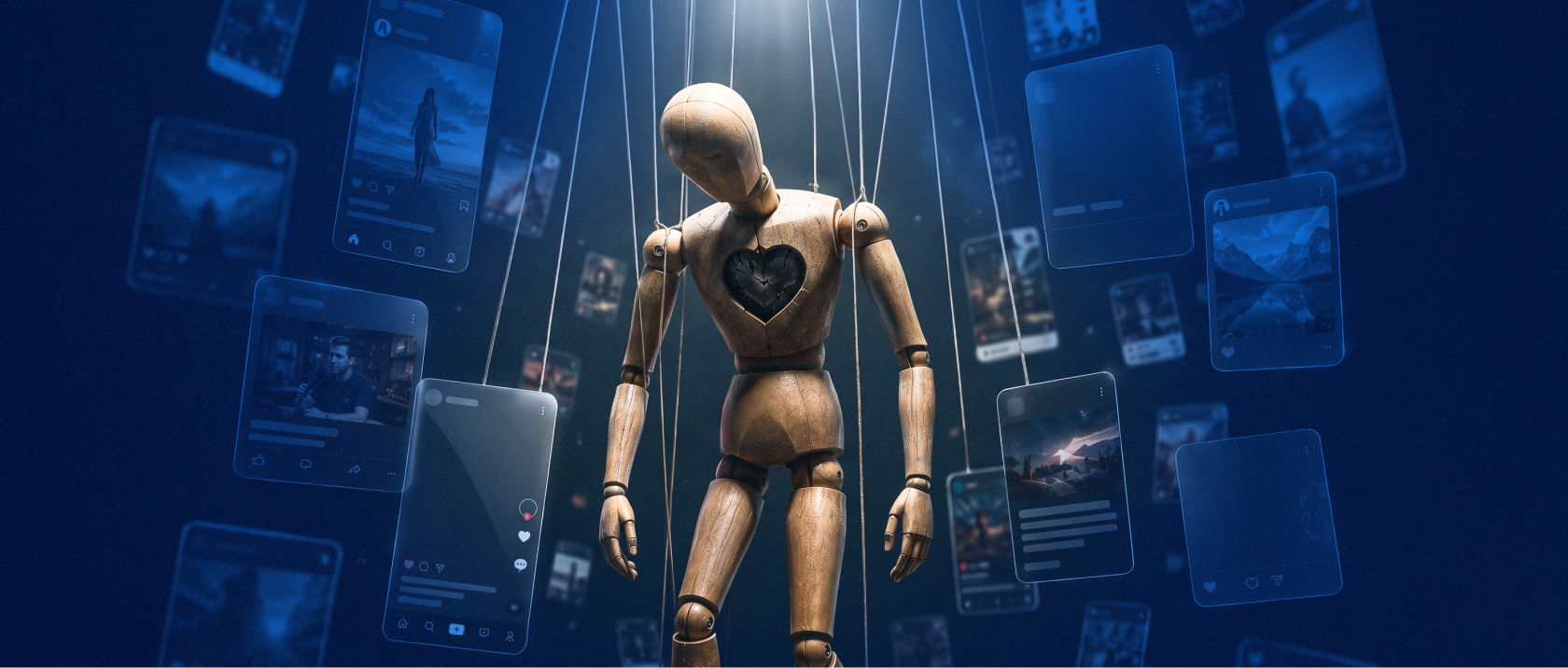
The audience you built on a platform was never yours. The followers count is a number the platform displays, not an asset you hold. The reach you earned can be cut without notice, the income demonetized retroactively on content that was fine for years, the account suspended by an automated system you cannot appeal to in time. When TikTok went dark in the United States for a stretch in early 2025, thousands of creators watched their primary income disappear in an afternoon — not because the audience left, but because the channel to that audience was switched off by someone else. The relationship lived on a platform's servers, governed by a contract the creator didn't write.
This is the system the next phase of the creator economy has to replace. And the diagnosis is right. The fix, for most of the approaches attempting it, is not.
What Real Creator Value Has to Do
Before getting into what's going wrong, it helps to be precise about what genuine creator value has to accomplish.
A real creator asset does three things. It connects the creator directly to an audience — without a platform standing in the middle as a toll booth and a kill switch. It sustains that connection over time, surviving algorithm changes, policy updates, and platform exoduses. And it accrues to the creator, not to the company hosting it — building something the creator owns rather than something they rent for as long as the terms of service permit.
Most of what the creator economy runs on today fails at least one of these. Platform reach fails the third — the audience relationship is owned by the platform, leased back to the creator on revocable terms. Pure virality fails the first and second — it spikes attention toward a moment rather than a relationship, and the moment a post stops trending, the connection evaporates.
The question of where the creator economy goes next is, at its core, a question about ownership. Whose asset is the audience, and do the mechanics of the system reflect that?
The Rented-Reach Trap
The creator economy is enormous and getting larger fast. It was valued at roughly $250 billion in 2025 and is widely projected to exceed $500 billion by 2030, with more than 200 million people worldwide now identifying as creators. By almost any measure, the sector has outgrown its side-hustle origins.
But the value accumulation in that market is heavily lopsided. Fewer than half of creators earn a livable income from it — surveys consistently put nearly half under $10,000 a year, with only around 4% clearing $100,000. Meanwhile, roughly 70% of creator income still flows through brand partnerships routed across a handful of platforms, and somewhere near seven in ten creators say a single algorithm change could seriously damage their earnings. The platform collects the behavioral data, sells the advertising, sets the payout rate, and owns the distribution. The creator generates the content that earns the attention — and holds none of the infrastructure that attention runs through.
[29.06.2026 10:53] Роман Моисеев: This is the system's design, not its malfunction. The reach has value on paper; the platform benefits from being the only party that can grant or revoke it. Industry observers have a name for the arrangement: digital sharecropping. You work land you don't own, you improve it season after season, and the owner can change the terms — or evict you — whenever it serves them.
What Digital Monetization Got Right — And Wrong
The digital answer to the old gatekeepers was direct monetization. If a creator could reach an audience without a record label, a studio, or a publisher, and get paid by ad share, subscriptions, and brand deals, the gatekeeper problem would be solved. The reward would flow straight from audience to creator.
The insight was correct. The implementation ran into two structural problems.
The first is the dependency trap. Direct monetization removed the old gatekeepers and quietly installed new ones. The creator no longer needs a label, but they now need the algorithm, the recommendation engine, and the monetization policy — all controlled by the platform, all subject to change without consent. When a platform suspends thousands of accounts overnight, or demonetizes a category of content retroactively, the creator's "direct" relationship to their audience turns out to have been routed through an intermediary the entire time. The reach was never owned. It was always on loan.
The second is the saturation problem. When attention is the reward and content is cheap to produce, the rational response is to produce as much of it as possible — and in 2026, more than nine in ten creators report using generative AI to scale output. The feed fills with mass-produced, low-authorship content that looks, to a ranking system, much like the real thing. Platforms have started fighting back: YouTube's 2025 policy explicitly targets "inauthentic," repetitious, automated content for demonetization. But the underlying issue is that the system struggles to tell a genuine creator from a content farm, because the signal it measures — uploads, views, watch time — can be manufactured.
Both problems share a root cause: the reward was disconnected from anything that couldn't be rented or faked. A view generated by an automated channel looks the same in the dashboard as a view earned by a person who knows their subject and shows up consistently. Without something verifiable and hard to automate underneath it, the system can't distinguish between the two — and can't protect the creators who are the real thing.
What Real Creator Value Actually Looks Like
The creator assets that hold up share a set of characteristics that distinguish them from both old-gatekeeper deals and rented-reach platform economics.
They reward owned relationships, not rented reach.
The difference between an audience a creator can reach directly and an audience a platform reaches on the creator's behalf is the difference between an asset and a liability. Real creator value lives in the relationships the creator controls. Everything routed through someone else's distribution is borrowed, and can be recalled.
They build compounding reputation, not one-time virality.
A creator who has built verified, recognizable authorship over years has something durable — a reputation that makes each new contribution more trusted and more valuable. A creator who caught one viral moment has a spike in a chart, not a foundation. The systems worth building are the ones where the most authentic creators over the longest time horizons become the most valuable participants, because trust is the one thing automation can't manufacture.
They distribute value proportional to contribution, not to algorithmic luck.
The fundamental alignment problem with platform economics is that reach is allocated by a recommendation system whose priorities the creator doesn't set and can't predict. A well-designed system inverts this: the quality and consistency of what you contribute determines what you earn, not whether an opaque ranking model decided to surface you this week. That requires a way to actually measure contribution — which requires verification.
They create utility beyond the content itself.
The most sustainable creator assets give the audience something they genuinely use, not just something to scroll past. If the only function of a following is to be sold to advertisers, the creator is a media-buying channel, not the owner of a relationship. If the audience relationship delivers trustworthy recommendations, real local knowledge, access, and credibility that the audience comes back for — then the creator has built retention, not just momentary attention.
The Physical World Difference
Location and physical-world discovery are particularly well-suited to this model of creator value — better, arguably, than almost any other domain.
The behavior being rewarded — going places, contributing genuine firsthand knowledge, building verified local expertise — is inherently resistant to automation. You cannot generate the experience of being somewhere. You cannot fabricate real local knowledge without being local. The verification layer that digital-native creator systems have to bolt on artificially is structurally embedded in the nature of the contribution itself.
The value of the contribution compounds in a way that feed content doesn't. A recommendation from someone who has genuinely spent three years in a neighborhood is categorically more credible than a take from an account that materialized last week. That accumulated, verified expertise becomes a reputation that grows more valuable over time — and a system that reflects this creates exactly the long-term alignment that virality destroys.
And the demand for the output is universal and continuous. People make decisions about where to go every day, several times a day. The market for trustworthy, current, locally-expert information about physical places is not a niche. It is one of the most basic and frequent human needs.
The creator economy going physical looks like this: owned relationships, compounding reputation, contribution-proportional rewards, and genuine utility rooted in a place. The rented-reach model worked until creators realized they were improving land they didn't own. The next phase is the one where the audience relationship is the creator's own, the expertise is verified, and the value compounds for the people who actually show up — and know where they are.
daGama is building the verified discovery layer for the physical world — where real presence is rewarded, genuine contribution compounds over time, and the creators who actually show up own the value they build. Learn more at dagama.world