July 8, 2026
Your City Is the Next Content Platform. The Only Question Is Who Owns It
Local recommendations power the world's biggest content platform, yet contributors earn nothing while platforms capture all value. daGama proposes on-chain ownership: portable, verifiable, presence-proven contributions that belong to the people who create them.
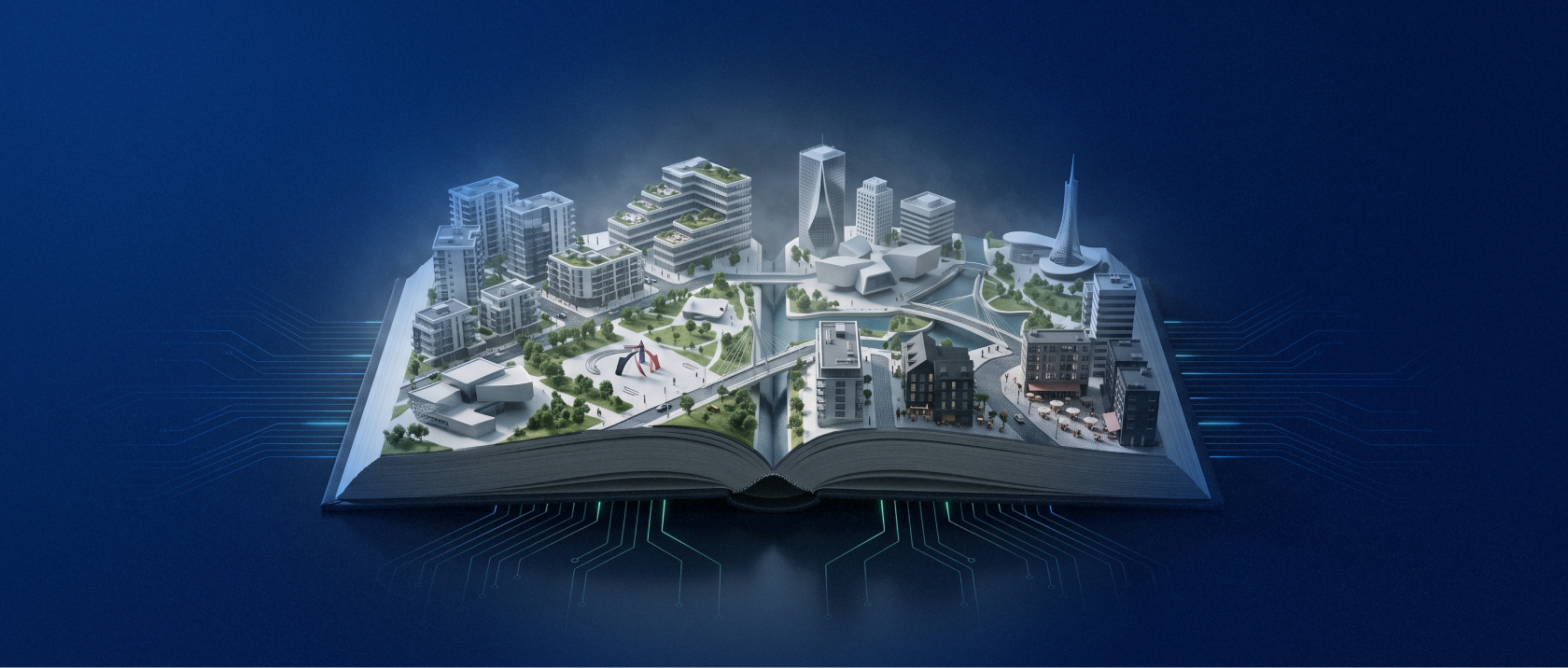

This article is part of daGama's weekly blog series exploring the intersection of physical-world experience, on-chain infrastructure, and the future of how people discover and interact with the places around them.
You have told more people where to eat than most food influencers ever will. The taqueria on the corner that shows up on no list. The bar with no sign. The bookshop that is worth the detour, the route through the park that is better at dusk, the hotel worth paying for and the three near it that aren't. Over the years you have quietly steered hundreds of decisions — where friends ate, drank, stayed, celebrated, took their parents — armed with nothing but a text message and firsthand knowledge of the place you live.
You were never paid for any of it. You do not own a single one of those recommendations. And the platforms that turned your neighborhood into a searchable, sortable, ad-supported map captured essentially all of the value you helped create. This is the quiet arrangement underneath modern local discovery: the most valuable content about the physical world is produced, constantly and for free, by the people who actually move through it — and it belongs to everyone except them.
The Scale of the Opportunity
The creator economy is not a niche anymore. It was worth roughly $250 billion in 2025 and is on track to cross $1 trillion within the decade, built on the labor of more than 300 million people who make and post content online. That number gets quoted endlessly. What almost no one says out loud is that it measures only the content that happens to live on a screen.
The larger platform is the one nobody has named yet: the physical world. Local intent already accounts for around 46% of all Google searches. Over 800 million "near me" searches happen every month. Eighty percent of consumers look up a local business at least once a week, and a third do it every single day. This is not idle browsing — 76% of "near me" searches lead to a visit within a day, and roughly 78% of local mobile searches end in an offline purchase within twenty-four hours. When people decide where to spend money in the real world, they consult the same kind of signal every time: 82% read reviews for local businesses, and 91% say they trust those reviews as much as a personal recommendation.
Put plainly: the physical world is already the most consulted content platform on earth. It simply doesn't call itself one — and the people producing its most valuable content are unpaid, uncredited, and unaware they are producing it at all.
Why the Old Platforms Can't Capture This
The dominant model for local discovery is a decade old and structurally incapable of rewarding the people it depends on. There are three reasons.
The first is extraction. The arrangement every legacy platform runs on is simple: you contribute, they own. Your review becomes their asset. Your photo becomes their inventory. Your carefully accumulated local knowledge becomes a data point in a database you will never control. The value is real and enormous, but it flows in one direction — which is why, across the entire creator economy, only somewhere between 1% and 5% of contributors ever earn anything meaningful. The rest are working for free and calling it posting.
The second is that the content is trapped. Whatever you build lives inside one company's walls. A decade of reviews, tips, and local authority on one app is not yours to move, not readable anywhere else, and not durable — it is worth exactly as much as that company's continued interest in hosting it, and it vanishes the day the company shuts down, gets acquired, or changes its terms. You are not building an asset. You are improving someone else's.
The third and deepest reason is that these platforms are optimized for the wrong thing. They do not exist to reward the contributor or to surface the truest signal. They exist to sell ads and hold attention, which means the map you consult is shaped by who paid to be on it. The person who actually knows the city and the advertiser who bought placement on it are treated identically by a system that was never designed to tell them apart.
The Ownership Problem, Reframed
This is where the framing has to shift. The physical world does not have a content problem. It has an ownership problem.
There is no shortage of content about your city. It is overflowing with it. Every resident is a walking, unindexed guide carrying years of firsthand knowledge that never gets written down, or gets written down once, for free, on a platform that keeps it. The bottleneck was never supply. People are more than willing to say what's good and why. The bottleneck is that saying it has never been worth anything to the person who said it.
So the question that legacy platforms keep asking — how do we get people to generate more content for us? — is the wrong one. The content already exists. The right question is: why does it belong to anyone but the person who created it? Answer that, and you are no longer running a content platform in the old extractive sense. You are running the ownership layer for a platform that already exists and already has hundreds of millions of contributors — they just haven't been given a reason to show up as themselves.
Why Blockchain Is the Layer That Scales
There are ways to reward local contributors inside a single app — points, badges, a creator fund, a revenue share. They all share one fatal limitation: they live and die inside that one app, controlled by that one company, worth nothing the moment you leave. That is exactly the trap we are trying to escape, and it is where on-chain infrastructure stops being a buzzword and becomes the actual answer.
Contribution has to be owned to be worth building on. A recommendation, a verified visit, a review should be an asset that belongs to the person who created it — not a row in a database they are permitted to look at. On-chain, contribution is property. It is yours the way anything you own is yours, which is the precondition for anyone rationally investing years of effort into it.
The record has to be portable, not captive. Reputation built across a thousand places in a city is only valuable if it travels with you — readable across any app, not hostage to the one that happened to host it. On-chain, the history and the standing built from it are the contributor's own, checkable by anyone, anywhere, surviving any single platform that comes or goes.
Value has to flow to the contributor, not the landlord. The old model routes the money to whoever owns the walls. When contribution is owned and portable, the economics invert: the person who actually did the work — went, knew, recommended — is the one positioned to capture the value of it. That asymmetry is the whole point, and it is the one thing the extractive model can never offer.
And presence has to be provable, or the whole thing is just another feed of claims. A content platform for the physical world only works if you can trust that its contributors were actually there. On-chain proof of presence anchors every contribution to a real visit to a real place — turning a feed of assertions into a record of verified experience that no amount of writing can counterfeit.
This is also why it uniquely scales. In-app rewards scale within one company. An ownership layer anchored on-chain scales across all of them, because it is shared infrastructure rather than one firm's private moat. The physical world is global; the only platform that can match its scale is one that is itself global, portable, and owned by no single party with a reason to cheat.
The Physical World Makes This Real
There is a reason location is where this gets built first. The thing being rewarded — was this person actually at this place — is, for real venues, a genuinely checkable fact. You cannot automate having been somewhere. You cannot generate a verified visit by writing better prose or spinning up another account. The single fact that anchors the whole system is exactly the fact an on-chain proof-of-presence layer records directly.
And it compounds. A contributor with two hundred verified visits across a city over three years is not shouting into a feed hoping to be seen. They are carrying a portable, owned, verifiable history — an asset that makes every new contribution credible on arrival and that grows more valuable the longer they keep showing up. The unpaid local expert of the old model becomes, in the new one, someone with a genuine stake in the place they know.
The next great content platform will not be another app you open to look at strangers on a screen. It is the physical world itself — the streets, the venues, the corners you already know better than any algorithm ever will — finally treated as what it has always been: the largest, richest, most consulted content platform in existence. The content is already there. The contributors are already working. The only thing missing was a system where what they produce belongs to them, travels with them, and is worth building. That is not a content problem. It is an infrastructure problem. And it is the one thing worth getting right, because the only real question left is who owns the platform your city already is.
daGama is building the verified discovery layer for the physical world — where real presence is rewarded, genuine contribution compounds over time, and the reviews you read come from people who were actually there. Learn more at dagama.world