March 13, 2026
daGama Travel Weekly 3: Navigating Italy
Is Dolce Vita still real? Learn where verified locals actually eat and stay. Explore where crypto payments are accepted; Trevi Fountain crowds are optional.
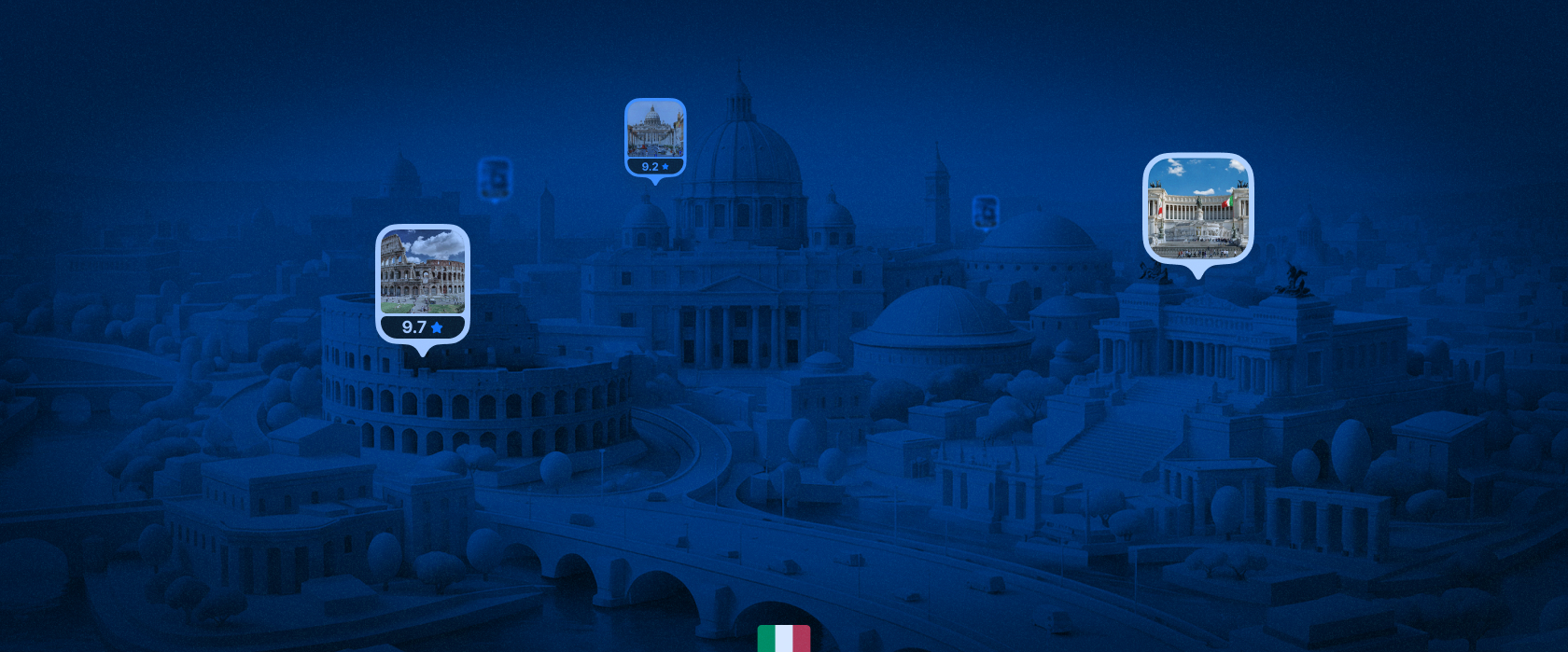
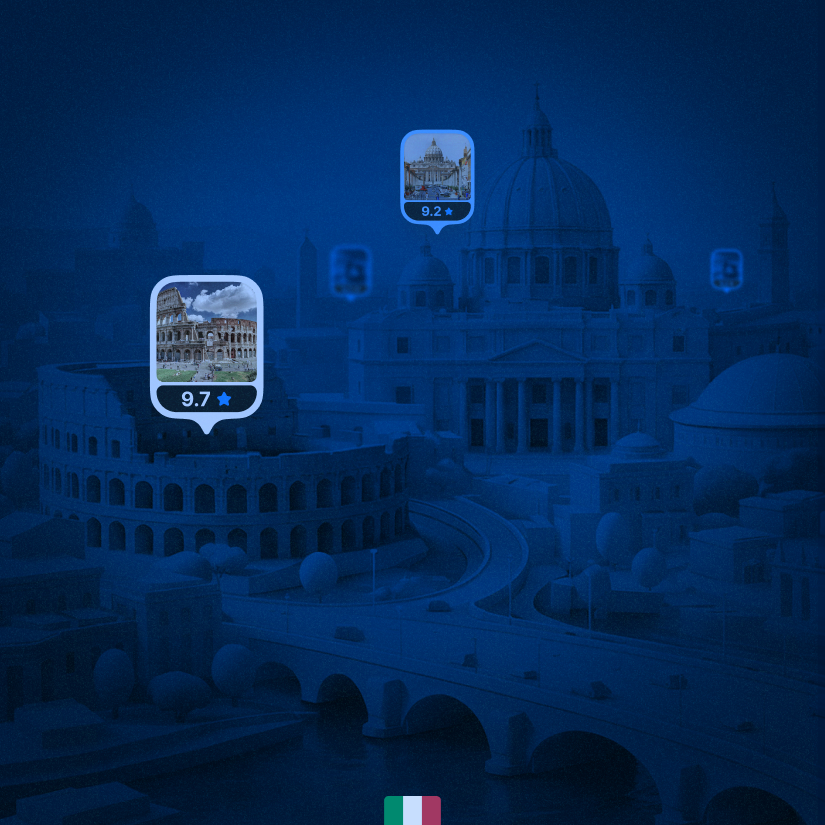
Italy receives 65+ million international visitors annually, making it the world's fifth most-visited country. Yet most travelers experience the same algorithmically-optimized circuit: Rome's Colosseum → Florence's Duomo → Venice's San Marco → Positano's cliffside views. And the list goes on: it’s a truly unique and historically-rich country. However, when you go around in tourist traps, you're not discovering Italy, but following a TikTok algorithm.
The real Italy, where 59 million Italians actually live, exists parallel to the tourist trail, invisible to traditional discovery platforms because it lacks English menus, Instagram aesthetics, and TripAdvisor SEO optimization. This is where daGama's verification infrastructure creates an asymmetric advantage.
Delving into European Overtourism Economics
Italy's tourism industry generated $53 billion in 2024, recovering to 98% of pre-pandemic levels. That trend continued in 2025 as well, but revenue was concentrated brutally. Venice sees 30 million visitors annually, for a city of just 50,000 residents—a 600:1 tourist-to-resident ratio that destroys the city's livability.
Italy's Ministry of Tourism data shows 72% of international visitor spending concentrates in just five regions. And what’s the deal with the remaining 15 regions, containing spectacular cities, cuisine, and culture? These receive only 28% despite being far more accessible and affordable.
What’s even worse, traditional platforms amplify this. Search "where to eat in Rome" and get 12,000 TripAdvisor results dominated by the same 100 restaurants near the Colosseum. The family trattoria in Testaccio with 180+ verified local check-ins on daGama but zero English online presence? Algorithmically invisible.
Delving into European Overtourism Economics
Italy's tourism industry generated $53 billion in 2024, recovering to 98% of pre-pandemic levels. That trend continued in 2025 as well, but revenue was concentrated brutally. Venice sees 30 million visitors annually, for a city of just 50,000 residents—a 600:1 tourist-to-resident ratio that destroys the city's livability.
Italy's Ministry of Tourism data shows 72% of international visitor spending concentrates in just five regions. And what’s the deal with the remaining 15 regions, containing spectacular cities, cuisine, and culture? These receive only 28% despite being far more accessible and affordable.
What’s even worse, traditional platforms amplify this. Search "where to eat in Rome" and get 12,000 TripAdvisor results dominated by the same 100 restaurants near the Colosseum. The family trattoria in Testaccio with 180+ verified local check-ins on daGama but zero English online presence? Algorithmically invisible.
What Verification Reveals
daGama's verified check-in data from Q4 2025 across Italy reveals patterns invisible to traditional platforms:
- Rome: Where Locals Actually Eat
Tourist reviews cluster in Centro Storico around Trevi Fountain and Pantheon. Average meal price: around €25-45. Quality: mediocre, optimized for volume, not excellence.
Verified local patterns: Testaccio, Trastevere, Prati, and Pigneto show the highest verified resident engagement. Average meal cost: €12-22. Quality: exceptional because these restaurants serve demanding locals who return weekly. Crypto acceptance: higher versus the tourist zones.
Specific example: Testaccio trattoria with 147 verified local check-ins over 90 days, a 4.7 rating from verified Romans, an average meal of € 15, and accepts USDT. Eight total TripAdvisor reviews, all in Italian.
- Florence: Beyond the Duomo
85% of visitor check-ins concentrate within 500 meters of the Duomo. Restaurants charge €30-55 for pasta that costs €10-18 in neighborhoods 15 minutes away.
Verified local patterns: Oltrarno, San Frediano, and Sant'Ambrogio show resident engagement. Quality-to-price ratio is 2.5-3x better. Example: Sant'Ambrogio osteria at €14 for incredible pasta, €6 wine, accepts crypto, has 12 TripAdvisor reviews (11 in Italian).
- Venice: The Abandoned City
Venice's historic center now functions as a theme park. Verified local patterns concentrate in Cannaregio, Castello, and Giudecca—the last neighborhoods where some Venetians still live.
The pattern shows a year-over-year decline in verified resident density as Venice loses its permanent population. Crypto acceptance: surprisingly high among surviving local establishments.
And this list can continue. But let's check some regional discoveries now.
Regional Discovery: Beyond the Big Five
- Bologna: Food Capital Without Crowds
Bologna—Italy's food capital—receives a fraction of Florence's visitors despite objectively superior food. daGama shows 890 local check-ins across 67 Bologna restaurants in Q1 2026. Average meal price: €14-20. Quality: exceptional. Crypto acceptance: high.
Bologna has fantastic food culture without Venice/Florence crowds or pricing, but it's algorithmically invisible because it lacks Instagram monuments. Worth visiting.
- Puglia: Southern Italy's Hidden Appeal
Puglia has a spectacular coastline, exceptional food, beautiful architecture, and prices 40-60% below Tuscany—but receives minimal tourism because it lacks famous landmarks.
Verified Italian traveler patterns show concentration in Lecce, Ostuni, and Polignano a Mare. These cities appear nowhere in standard "Italy itinerary" content because algorithms optimize for familiarity, not quality.
- Emilia-Romagna Food Trail
Emilia-Romagna (Bologna, Modena, Parma) is objectively Italy's food heartland—origin of Parmigiano-Reggiano, prosciutto, balsamic vinegar, tortellini. Yet it receives minimal international tourism compared to Tuscany.
Verified local data shows 2,100+ regional check-ins —authentic food experiences at a fraction of Tuscan pricing. Why not pay a visit and get a different experience?
The Anti-Itinerary Advantage
Traditional Italy planning takes around 15-20 hours researching across platforms, cross-referencing reviews you don't trust, and building an itinerary leading to the same overcrowded places as everyone else.
Verified discovery helps you filter for verified Italian resident check-ins. Moreover, AI trained on verified data surface patterns traditional algorithms miss (Bologna food, Puglia coast, Emilia-Romagna authenticity), and discovers dynamically based on real-time verified data.
You eat where verified Romans eat in neighborhoods you'd never find through TripAdvisor. You discover Bologna's food scene without Florence's crowds, and explore Puglia at Amalfi quality for half the price. You pay with stablecoins, saving €75-120 while supporting crypto-accepting local businesses.
This is Italy beyond the Instagram hotspots—verified, crypto-enabled, and algorithmically undiscoverable until now.
The Stablecoin Italy Strategy
Northern Italy (Milan, Turin, Bologna) shows 25-35% crypto acceptance, whereas southern Italy (Naples, Palermo) has 12-18%.
How would your two-week workflow look? Load €1,800 equivalent in USDC via OKX Wallet. Daily spending in verified local areas is expected to be in the range of €1.50-2.50 for coffee, €12-18 for lunch, €18-28 for dinner, and €6-12 for evening wine.
Savings versus credit card:
- Traditional rails: €95-140 in fees (foreign transaction 2-3%, conversion spreads 1-2%, dynamic currency conversion 3-5%)
- Stablecoin payments: €12-18 network fees
- Net savings: €75-120.
Let's also be specific about what verification saves you on a typical two-week Italy trip:
Traditional approach:
- €2,000 total spending
- €60-80 foreign transaction fees (3-4%)
- €40-60 currency conversion spreads
- €100-200 wasted on disappointing experiences based on fake reviews
- €200-300 defensive overspending on "safe" expensive options because you can't trust cheaper alternatives
- Total inefficiency: €400-640 (20-32% of your budget going to fees, fraud, and defensive overspending).
Now, what about the verified crypto approach?
- €2,000 total spending
- €12-18 Arbitrum network fees for stablecoin payments
- €0 conversion spreads (USDC maintains dollar peg)
- Minimal disappointment through verified recommendations (87% satisfaction rate vs. 62% traditional)
- Confident exploration of authentic local options at lower prices
- Total saved: €380-620 that goes to actual Italian experiences, better food, extra days, or just keeping more money.
Doesn’t that sound like a marginal improvement? It's 20-30% of your travel budget returned from intermediaries, fraud, and defensive spending to actual experiences. Multiply that across Italy's millions of annual international visitors, and you're talking about €25-40 billion in value currently being extracted or wasted that could flow to authentic experiences and local businesses.
Experience La Dolce Vita Your Way
The travel industry is changing whether incumbent platforms want it to or not. Travelers are demanding verification while businesses are adopting crypto payments. Local communities are recognizing that verification infrastructure redistributes tourism value more equitably than traditional marketing ever could.
Every major travel destination of today faces the same challenges: the trust collapse in reviews, overtourism concentration, displacement of authenticity, and extraction by intermediaries. And every travel route benefits from the same solution: cryptographic verification of presence, AI trained on verified data, stablecoin payments eliminating extraction, portable reputation rewarding quality contribution.
Start in Italy. Use verification to discover the country beyond Instagram hotspots. Pay with stablecoins to keep more money in your pocket and support crypto-forward local businesses. Build a verified reputation documenting authentic experiences. Then use that approach everywhere you travel.
Because once you've experienced verified discovery—knowing recommendations come from people cryptographically proven to have been there, filtered by verified residents rather than algorithm manipulation, rewarded through tokens rather than extracted by advertising platforms—you'll never go back to trusting platforms like TripAdvisor again.
Ready to discover the real Italy? Download daGama, load your wallet with USDC, and start exploring beyond the tourist traps. Your first verified check-in in Rome, Florence, Bologna, or anywhere in Italy could earn you tokens while helping thousands of future travelers discover authentic experiences.
And if you discover something exceptional that doesn't exist in our database yet, create it. You'll earn ongoing credits as other travelers verify your discovery, building both economic rewards and on-chain reputation as a trusted Italian traveler.
The verification revolution starts with you. Start in Italy. Start today.
Contact Us | Get App on App Store |Download on Google Play
This article is for informational purposes only and does not constitute financial, investment, or legal advice.